U2Win games, pokies and lobby categories
 Available in AU
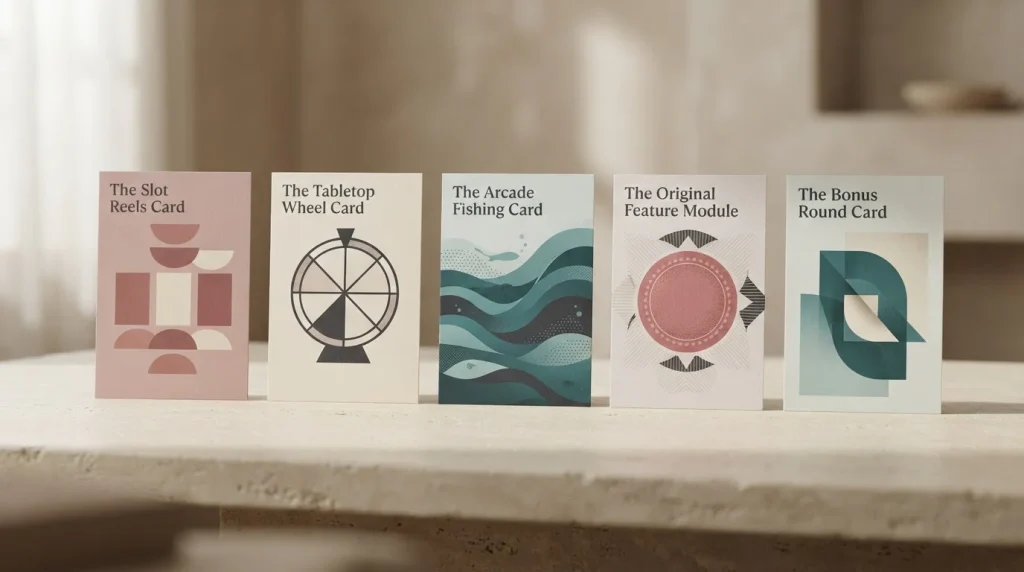
U2Win presents a pokies-led casino catalogue supported by named provider collections, a Live Casino category, Fishing games and features marked U2WIN ORIGINAL. The browser-based menu brings several kinds of gambling activity under one account, but the categories do not all share the same mechanics. Understanding the difference between a provider name, a game’s own rules and the account balance is the clearest way to read this product.
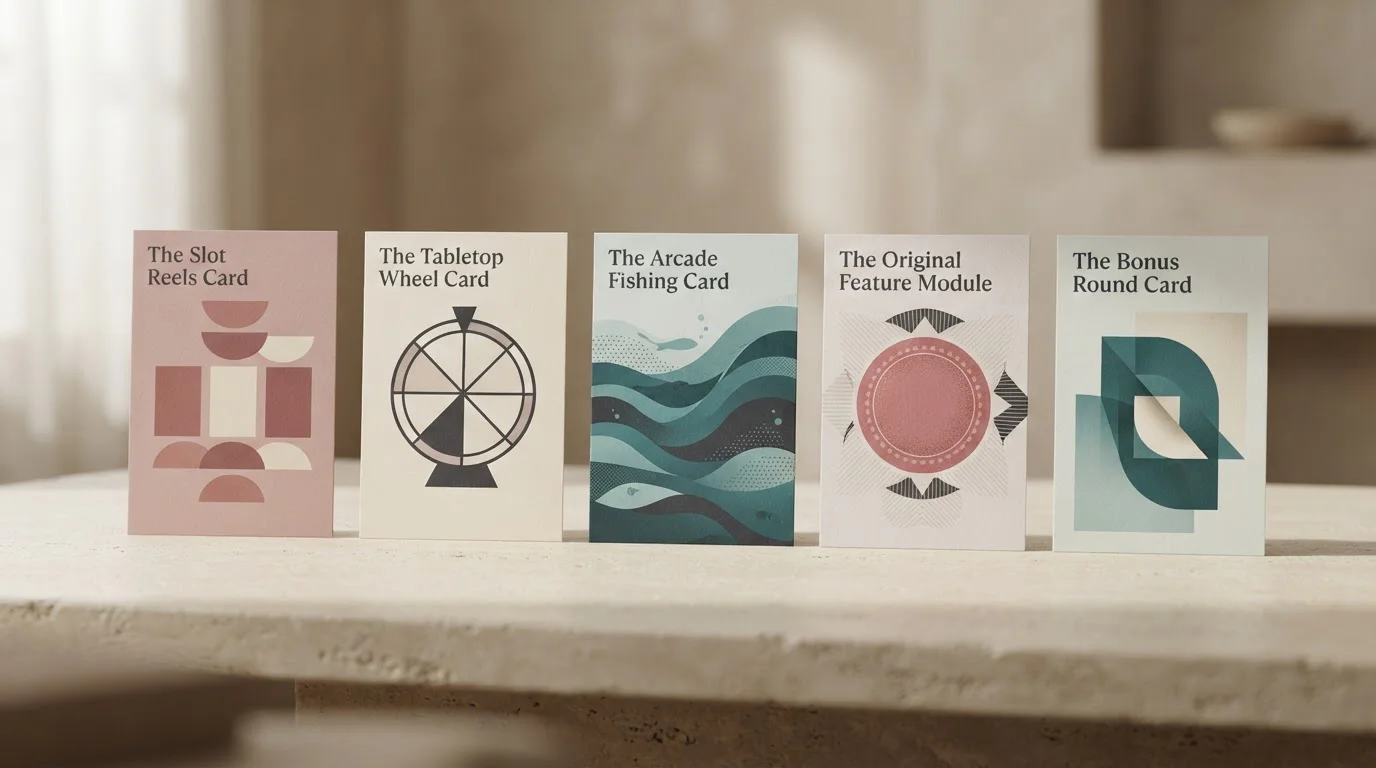
Table of Contents
- Original features within the U2Win interface
- Pokies and provider-labelled collections
- Provider names, software and the limits of a label
- Live casino and fishing as different game categories
- Expected return, house edge and short-run variance
- Questions about U2Win games
- The game menu reveals a pokies-centred platform
Original features within the U2Win interface
U2Win’s homepage groups some of its own features under U2WIN ORIGINAL. The name functions as a category marker within the product rather than as a technical description of a game’s randomness, mathematical return or payout method. An original label can tell a visitor who presents a feature; it does not by itself establish how the underlying result is generated or how a balance is treated.
The homepage also names LUCKY PICK among its modules, alongside a daily Deposit Lucky Draw presentation. These are named U2Win features in the broader interface, and their presence helps distinguish the brand from a lobby composed only of external provider names. Their account and promotional conditions still need to be separated from the mechanical features of a conventional slot or live-dealer game.
Some online gambling products use the word “original” to describe a game built by the platform rather than licensed from a studio. For analysis, the more useful questions are how a result is produced, what determines the value of a win and what account conditions apply to the balance afterward. The word on a navigation tile answers none of those questions on its own.
- Category identity: an original tag explains how the interface groups a feature.
- Game rules: symbols, rounds and winning conditions explain what a particular activity does.
- Mathematical properties: odds, payout tables and return assumptions concern the game’s underlying design.
- Account treatment: any restricted credit or balance condition operates separately from the animation or game result.
These layers can be easy to blur in a busy interface. An animated selection may feel like a game result, yet the user’s actual monetary position depends on the rules attached to that event and the status of the resulting account balance. A label, image or celebratory animation should not replace the specific written condition.
U2Win’s site also uses a compact, mobile-oriented layout. The fact that a feature sits within the same bottom navigation environment as other games says something about presentation, not about the equivalence of financial or wagering terms.
Pokies and provider-labelled collections
Pokies are central to U2Win’s Australian-facing identity. The operator’s public pages display provider or collection labels including JILI, Aristocrat, Microgaming, BNG, Playson, V Power, Slot Mania, Acewin, UU Slot and Crowd Play. Those are the names shown in the site’s catalogue presentation; the appearance of a supplier’s name does not itself establish the operator’s commercial authorisation to distribute that supplier’s games.
A provider label is primarily a browsing aid. Games grouped under a name can differ in reel configuration, rules, bonus events and sensitivity to rare larger outcomes. It is therefore safer to understand the label as an organisational clue rather than to infer a common return rate, fairness rating or play experience across everything associated with it.
Several category names have close variants. For example, Slot Mania appears in related V-Plus or VPlus material, while U2Win presents UU Slot with the UUS2 form in its wider game catalogue. Naming variants matter when comparing screenshots or archived descriptions: a change in spelling can reflect catalogue presentation rather than a new game studio or a substantially different product.
| Visible label | What it indicates | What requires game-specific detail |
|---|---|---|
| JILI, BNG and Playson | Named collections or provider entries in U2Win’s menu | The rules of each individual title |
| Aristocrat and Microgaming | Supplier names used in the catalogue presentation | Any operator distribution rights and game-level paytable |
| V Power, Slot Mania, Acewin | Additional pokies-oriented labels | Individual outcome mechanics and volatility |
| UU Slot and Crowd Play | Further catalogue names shown by U2Win | Which distinct games sit under a label |
For an individual pokie, a paytable provides the basis for understanding symbol combinations, special events and the relationship between a stake and possible outcomes. Reels and bonus rounds can look familiar across two titles while their underlying probability distributions are different. A collection name alone does not tell a reader whether small results occur often or the experience depends on occasional large outcomes.
The practical distinction is between who is named in a tile and what the particular game’s rules establish. Browsing classifications are useful for understanding the operator’s positioning; they should not be mistaken for mathematical specifications or endorsements.
Provider names, software and the limits of a label
In online casinos, a visible studio name can refer to a software developer, a distributor, a historical game brand or an interface grouping. Those roles are not interchangeable. A company may create a game, another business may distribute it, and the casino may present it through a themed collection with its own naming conventions. Without that distinction, a familiar mark can be made to carry more meaning than it actually supports.
U2Win names established supplier brands such as Aristocrat and Microgaming in the same broad menu as newer and localised pokies collections. That mixture is relevant to the identity of the catalogue. It does not turn an entry in a casino menu into a test report or a direct statement by the named supplier about the site operating it.
A reader comparing a game label should keep at least three separate objects in mind. The first is the casino interface, where U2Win chooses how to group and describe content. The second is the underlying title, whose game rules govern the actual wager and result. The third is the account system, which records credit, debits and any restrictions on the resulting balance. A mark visible in the first layer cannot prove the second and third layers have particular properties.
- Check the precise title: distinguish a named game from a general studio or category banner.
- Interpret the paytable: understand which events count as winning combinations and what stake unit is used.
- Separate game math from platform rules: a displayed game outcome is not a statement about final cashout conditions.
- Treat branding as branding: provider names help identify catalogue sections without independently auditing them.
The mobile layout accentuates this difference because compact icons and abbreviated names leave less room for context. U2Win’s web interface uses an app-like navigation bar, but the underlying financial and identity records remain tied to the same account. A menu icon is a way to organise content, not a substitute for a game rule or account statement.
For a related explanation of how activity and account identity connect, the U2Win account conditions describe registration, mobile OTP and balance-related terms. Those conditions concern the platform account, regardless of which provider label appears above a game.
Live casino and fishing as different game categories
U2Win uses Live Casino and Fishing among the categories described in its site navigation and promotional material. They sit beside a pokies-led catalogue but refer to different styles of activity. “Live Casino” is an interface category associated generally with streamed or dealer-led table-game formats, while fishing games in online casino menus commonly use arcade-style mechanics and a distinct visual presentation.
The difference is important when interpreting a screenshot of a lobby. A large live-casino tile may identify a department of the site, not a particular studio, dealer or table with a specified betting minimum. Likewise, a fishing label identifies a broad game genre; its individual titles can have different controls, stakes and rules. The category name is not enough to infer the rules of a particular round.
General live-dealer games may involve visible cards, wheels or real-time interactions, but what is shown on screen is only one part of how an online account records a stake. Time limits, accepted betting choices and settlement can vary by title. The core distinction between a game’s rules and the account’s balance records applies just as much to live formats as to automated pokies.
Fishing-style products can make a sequence of actions appear unlike a traditional reel spin. An arcade-like control or continuous animated scene does not remove the financial meaning of a wager or change the importance of the game’s particular rules. The amount committed, the result recognised and the amount credited to an account are the relevant separate concepts.
U2Win also references a SportBook category in its wider interface, although the casino-focused product is organised around pokies and associated gaming formats.
Across these categories, treating colourful tiles as a catalogue map is more helpful than treating them as evidence of a common win probability. The format changes the visual experience; the mathematics and settlement conditions belong to the specific activity being played.
Expected return, house edge and short-run variance
Understanding pokies also requires a distinction between an expected mathematical return and the amount any one person receives during a session. Return to player (RTP) describes a theoretical ratio of money returned to stakes across an enormous collection of outcomes under a specified game model. House edge is the complementary long-run share attributed to the game. These are properties of a particular game configuration, not characteristics that can be inferred from a casino brand name.
As a general identity, the expected house-edge fraction equals one minus the expected return fraction. When the return is expressed as a percentage, the two percentage figures add up to 100%. This identity explains how descriptions of theoretical game cost relate to payout design; it says nothing about the timing, order or size of a real individual’s wins and losses.
Variance describes how outcomes fluctuate around a mathematical expectation. Some structures generate many small results, while others concentrate more of the theoretical return in events that occur infrequently. Over a short series of plays, the observed return may be far above or below the long-run expectation. A pleasing early result therefore does not prove that an identical result will happen again, and an extended losing streak does not make a future win due.
Consider the formula illustrative expected gaming cost = total amount staked × assumed house-edge rate. Here “total amount staked” means the sum committed over repeated rounds, including any money re-staked after a previous result. It is not necessarily the initial wallet balance. Using a generic assumed rate can show the scale of a theoretical cost, but it cannot predict the outcome of an individual session.
- Stake: what is committed to one wager or round.
- Turnover: the cumulative total of stakes across rounds, not necessarily the initial amount deposited.
- Expected return: a model average over repeated outcomes, not a promised amount for a player.
- Variance: the size and frequency of fluctuations around that expectation.
Game math and platform balance conditions also need to be kept apart. A correct game result can create a displayed credit while a separate account rule affects whether that credit can be withdrawn. The U2Win loyalty programme adds its ownulary of points, rebates and progress, which should not be treated as mathematical changes to a game’s underlying outcome probabilities.
The most useful reading of U2Win’s mixed lobby is therefore descriptive: pokies, live-oriented and original-labelled features are distinct product areas. The costs and results of wagering still depend on the individual activity, repeated stake exposure and account terms, with no short-run expectation of making money.
Questions about U2Win games
Which pokies provider names appear in U2Win’s catalogue?
U2Win displays names including JILI, Aristocrat, Microgaming, BNG, Playson, V Power, Slot Mania, Acewin, UU Slot and Crowd Play.
Does U2Win have a live casino category?
Yes. U2Win describes a Live Casino category alongside its pokies-led game menu and a Fishing category.
What does U2WIN ORIGINAL mean in its lobby?
U2WIN ORIGINAL is a label for platform-presented features. The label itself does not specify an individual game’s mathematical rules.
Does RTP predict the result of a short pokies session?
No. RTP is a theoretical long-run expectation for a particular game model; short-run results fluctuate and are not predictable from that average.
The game menu reveals a pokies-centred platform
U2Win combines named pokies-provider collections with live-casino, fishing and original-labelled features. Its distinctiveness lies in how those sections are presented together in an Australian-oriented, browser-based interface, rather than in a single game genre.
Studio labels and category names help describe the catalogue, while individual game rules explain the actual wager. Expected return and variance help explain long-run cost and short-run uncertainty, and account conditions remain a separate matter. Keeping those layers apart produces a more useful understanding of the product than treating a colourful lobby tile as a promise about outcomes.